A failed component tells you what has broken. It does not necessarily tell you why.
When a hydraulic pump, coupling or gearbox fails, the immediate priority is understandably to get the machinery working again. Replacing the damaged component may restore production but fitting an identical replacement does not guarantee that the same failure will not happen again.
In mechanical power transmission and fluid power systems, the component that fails is not always the root cause of the problem.
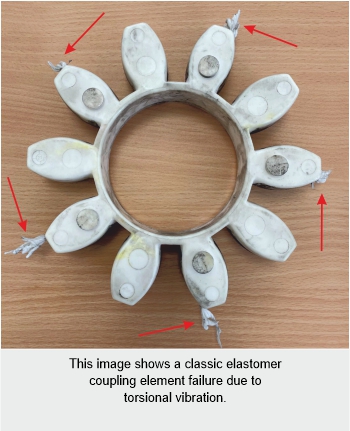
A coupling failure may indicate torsional vibration.
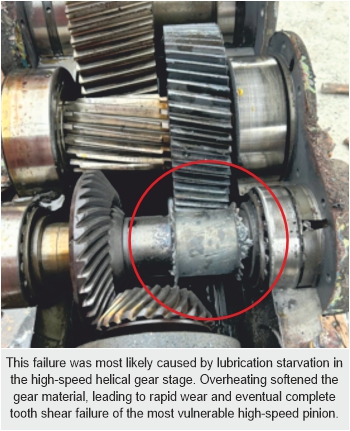
A damaged gearbox may result from shaft misalignment or inadequate lubrication.
Repeated hydraulic problems may stem from heat mismanagement, contamination, duty cycle or installation constraints rather than pump specification alone.
The failed component itself can often provide useful evidence. Wear patterns, damaged coupling elements, excessive heat, unusual noise and repeated seal or bearing failures may all help reveal what has been happening within the wider system.
This is why effective engineering support requires more than identifying replacement parts from a catalogue.
At jbj Techniques, many customer enquiries begin with a component request and develop into a wider engineering discussion involving reliability, efficiency, service life, load characteristics, operating conditions, system integration or bespoke mechanical requirements.
Sometimes the correct answer is a straightforward replacement. At other times, understanding the application reveals that a different component, a modified arrangement or a more complete engineered solution is required.
For more than 50 years, we have supported projects across industries including:
» Transport and infrastructure.
» Marine and offshore.
» Renewable energy.
» Processing industries.
» Heavy plant and mining.
» Factory automation.
» Specialist vehicles.
» Agricultural equipment.
» Bespoke machinery applications.
Our role is often not simply to supply products, but to help customers understand the behaviour of the systems in which those products operate.
That combination of practical application knowledge, diagnostic experience, long-standing supplier relationships and in-house design and machining capability allows us to support both standard and highly specialised requirements.
Because sometimes solving the problem is more important than simply replacing the part.
What mechanical or fluid power challenges are becoming increasingly difficult in your industry?
Where Diagnostic Expertise Meets Real-World Engineering
For decades, jbj Techniques has delivered specialist expertise in mechanical power transmission and fluid power systems across an exceptionally wide range of industries.
Our projects have included mechanical bridge systems in London and Newcastle, marine winching systems, factory production machinery, jet-powered vehicles, green power conversion for trains and heavy plant, EV and public transport power supply systems, offshore wind and wave energy applications, mining and tunnelling equipment, theatre stage mechanics, chemical and petroleum processing plants, agricultural machinery, and many more, including projects we are unable to publicly disclose.
From concept support through to application engineering and supply, jbj Techniques combines technical knowledge with practical experience to help customers solve demanding mechanical and fluid power challenges.
We pride ourselves on these abilities:
1) Real-world diagnostic knowledge.
2) Failure analysis and problem-solving capability.
3) Practical application engineering experience.
We would welcome the opportunity to learn more about your current projects and discuss how jbj Techniques may be able to support your business.
Engineering Beyond Product Supply: What Is Your Coupling Telling You?
Flexible couplings are often viewed as simple mechanical components, until repeated failures begin causing vibration, downtime, backlash or expensive drivetrain damage.
In reality, coupling wear patterns can reveal far more about a system than many people realise.
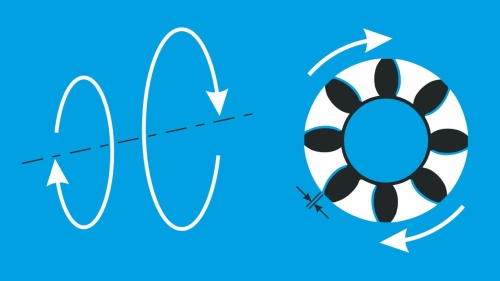
What appears to be a failed coupling may actually indicate:
» misalignment.
» torsional shock.
» excessive backlash.
» overload conditions.
» vibration issues.
» incorrect coupling selection.
» or wider drivetrain design problems.
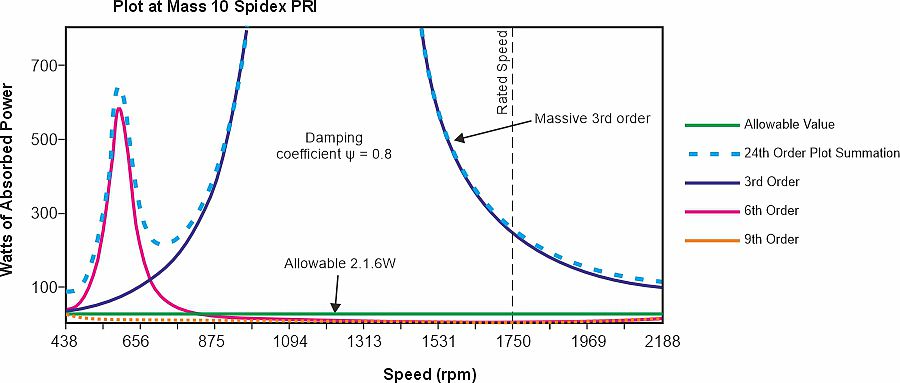
Image from
'Understanding Coupling Elastomer Element Failure Due to Torsional Vibration' Link to:
full article
At jbj Techniques, we regularly support engineers investigating mechanical power transmission issues across industrial machinery, marine systems, renewable energy, transport, heavy plant and processing industries.
Very often, the coupling itself is not the root cause of the failure, it is simply the first visible symptom of a wider system issue.
Understanding the behaviour of the complete drivetrain is where engineering experience becomes critical.
Over the years, we have published technical discussions covering:
» torque-related failure patterns
» coupling elastomer analysis
» torsional wind-up and backlash
» coupling selection and application tools
» and practical drivetrain problem-solving
Because successful coupling selection is rarely just about torque capacity alone.
It involves understanding:
» dynamic loading.
» start-up conditions.
» vibration behaviour.
» shaft movement.
» environmental factors.
» service life expectations.
» and the operational realities of the application.
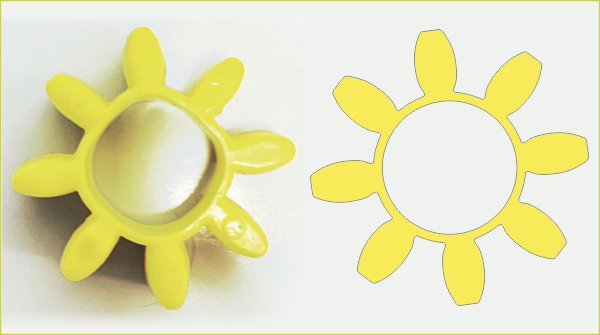
Image from
'Decoding Torque from Visual Failure Patterns' Link to:
full article
At jbj Techniques, engineering beyond product supply means helping customers understand not just which coupling to use, but why problems occur in the first place.
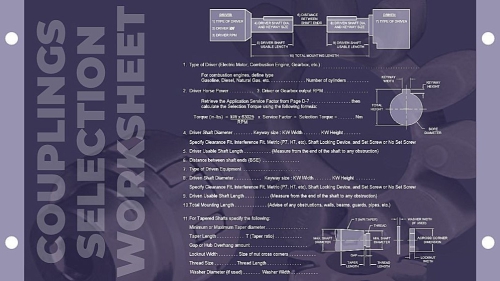
Image from
'Engineering Tools That Save Time: Meet Our Coupling Selection Worksheet' Link to:
full article
What coupling or drivetrain issues are becoming increasingly challenging in your applications?
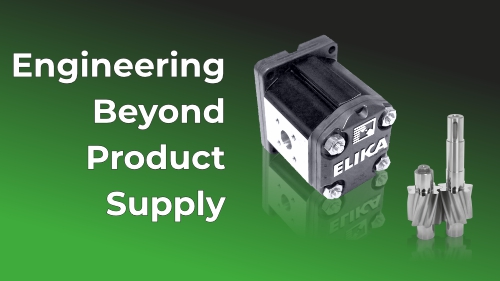
Engineering Beyond Product Supply: Electrification of Refuse Lorries.
Electrification of refuse lorries ~ quiet hydraulic solutions for modern waste vehicles.
As the waste management industry moves towards vehicle electrification, manufacturers are facing a new set of engineering challenges. One of the most significant is the need to maintain hydraulic performance while dramatically reducing operating noise. This was exactly the challenge presented in a recent refuse lorry electrification project, where a customer required a quiet tandem gear pump solution capable of operating under demanding conditions.
The challenge of electrified refuse vehicles
One of the most significant challenges is the need to maintain hydraulic performance while dramatically reducing operating noise. This was exactly the challenge presented in a recent refuse lorry electrification project, where a customer required a quiet tandem gear pump solution capable of operating under demanding conditions.
Traditional refuse collection vehicles rely heavily on diesel engines, which naturally mask much of the hydraulic system noise. However, with the transition to electric drivetrains, hydraulic noise becomes far more noticeable, particularly during early morning residential collections where noise pollution is a growing concern.
The customer required a tandem gear pump solution that would:
» Deliver reliable hydraulic performance for refuse collection operations.
» Operate with exceptionally low noise levels.
» Function at speeds beyond the standard rated maximum speed of the pump.
» Integrate with a variable-speed pump drive system.
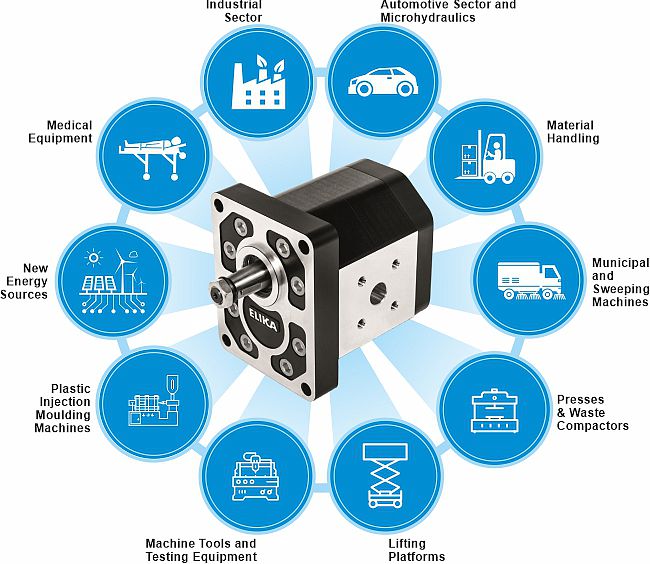
To meet the acoustic requirements of the application, conventional external gear pumps were not suitable. Instead, the project focused on the use of ELIKA low-noise, high efficiency gear pumps from Marzocchi Pompe.
Why ELIKA Pumps Were Selected
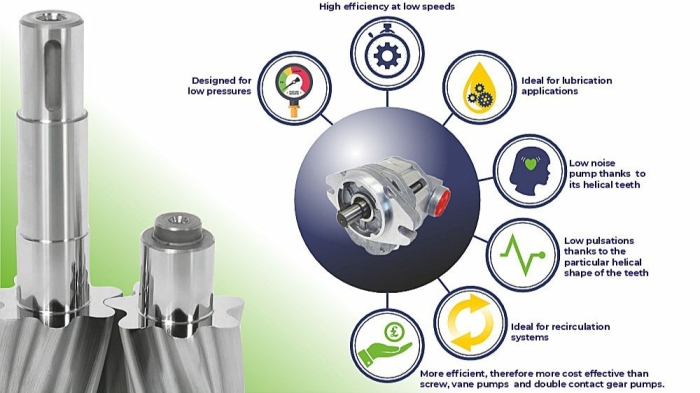
The ELIKA range is specifically designed for low-noise hydraulic applications. Unlike standard external gear pumps, ELIKA pumps use a patented helical gear geometry that significantly reduces pressure pulsation and vibration, two of the main contributors to hydraulic noise.
For electrified refuse lorries, this offered several key advantages:
» Quieter vehicle operation in residential environments.
» Improved operator comfort.
» Reduced vibration throughout the hydraulic system.
» Compatibility with variable-speed electric drives.
The challenge, however, was that the pumps needed to operate beyond their standard maximum rated speed.
Engineering a Solution for High-Speed Operation
Rather than treating the speed requirement as a limitation, Marzocchi embraced the opportunity to further develop the ELIKA platform for emerging electrification applications.
Working closely with jbj Techniques engineers, Marzocchi engineers carefully reviewed the operating conditions of the hydraulic system. To improve the pump's ability to operate reliably at higher rotational speeds, the design team modified the position of the suction ports to enhance inlet flow characteristics and improve suction conditions.
This design optimisation was particularly important in maintaining stable pump performance at elevated speeds and reducing the risk of cavitation.
To meet the project timeline, Marzocchi manufactured the first units within their development workshop, allowing the customer to proceed quickly with testing and vehicle integration.
The Result
The final solution proved highly successful.
The combination of:
» ELIKA low-noise technology,
» Variable-speed electric drive integration,
» Optimised suction port design,
» Collaborative engineering support,
enabled the customer to achieve the quiet hydraulic performance required for their electrified refuse lorry application.
The project also demonstrated how hydraulic technology continues to evolve alongside vehicle electrification, helping manufacturers overcome new operational and environmental challenges.
The engineering success of the hydraulic solution remains an excellent example of innovation through collaboration.
Supporting the Future of Electrification
As more off-highway and municipal vehicles transition to electric power, hydraulic systems must adapt to new expectations around efficiency, acoustics, and controllability.
Low-noise hydraulic technologies such as ELIKA pumps are becoming increasingly important in applications where vehicle noise can no longer be hidden behind combustion engines. With close cooperation between system designers, OEMs, and manufacturers such as Marzocchi Pompe, innovative hydraulic solutions are helping drive the next generation of clean, quiet vehicle technology.
Link to find out more about
ELIKA® low noise, high efficiency gears pumpsDo you require more than the available standard gear pumps for your applications?
Meanwhile at the other end of the spectrum an unlikely application of a Marzocchi gear pump supplied by jbj Techniques, feeding kerosine into the afterburner of this jet powered VW at 180 litres/min, 160 psi (11.03 bar), delivered in 10 second bursts.
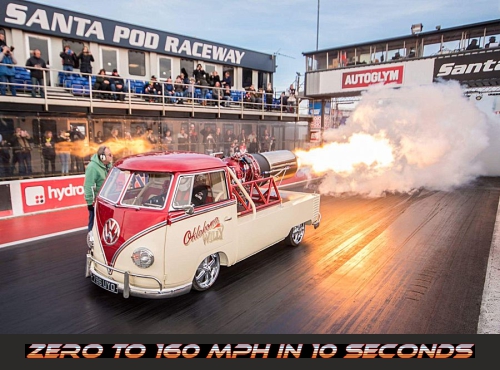
Image from
'Can You Spot the Marzzochi Gear Pump' Link to:
full article
Engineering Beyond Product Supply: Retrofitting diesel-powered equipment for electrification is rarely straightforward.
The transition from diesel power to electric drive systems is creating new engineering challenges across many industries. Retrofitting diesel-powered equipment for electrification is rarely straightforward.
While the objective may sound straightforward, replacing an internal combustion engine with an electric motor, the reality is often considerably more complex, particularly where existing driveline systems, mounting arrangements and operational flexibility must be retained.
A project undertaken by jbj Techniques involved supporting the clean-energy retrofit of heavy equipment by replacing a diesel engine with a 250kW D355 frame electric motor.
The challenge was not simply mounting the new motor.
The customer needed to retain compatibility with an existing SAE 1 / SAE 14 over-centre clutch arrangement while preserving the option to revert back to diesel power in the future if operational requirements changed.
To achieve this, jbj Techniques designed and manufactured a bespoke 800 mm diameter cast iron bellhousing together with a custom coupling arrangement that converted the electric motor shaft to an SAE 14 flange configuration. This ensured full mechanical compatibility between the new electric drive system and the existing rotating equipment.
Projects such as this demonstrate how successful electrification often depends on far more than selecting a suitable motor.
Critical considerations can include:
» driveline compatibility,
» torsional characteristics,
» mounting integrity,
» alignment accuracy,
» thermal behaviour,
» future serviceability,
» and operational flexibility.
The project also highlighted the value of combining design engineering with in-house manufacturing capability.
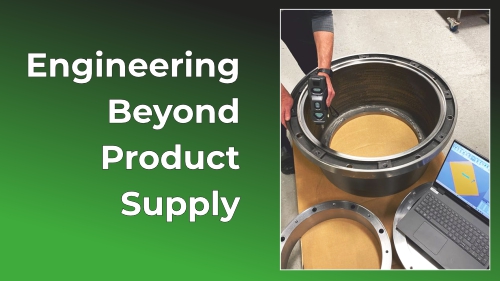
The 230kg cast iron housing was produced using UK-sourced castings and machined on jbj Techniques' Puma V8300M CNC machining centre, capable of handling components up to 800mm diameter. Inspection was undertaken using a Keyence XM-5000 handheld CMM system, allowing rapid in-process verification directly at the machine.
At jbj Techniques, projects often begin with a component requirement but develop into a broader engineering solution involving mechanical integration, bespoke manufacturing and system-level problem solving.
From couplings, bellhousings and hydraulic systems through to complete drivetrain integration challenges, our focus remains the same: understanding the application, understanding the system, and engineering practical solutions that work reliably in the real world.
Extract from
'delivering a clean energy retrofit' Link to:
full article
Engineering Beyond Product Supply: Overheating is often an early warning sign that a system is operating inefficiently.
If your application is suffering from:
» rising oil temperatures
» reduced component life
» unreliable operation
» excessive thermal load
» or recurring overheating issues
there is usually a wider thermal management problem affecting system reliability.
In high-demand industrial environments, heat can quickly become one of the biggest causes of:
» reduced efficiency
» premature wear
» oil degradation
» unexpected failures
» and costly downtime
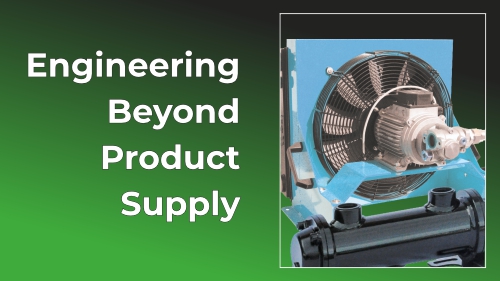
The challenge is not simply adding a cooler. It is understanding how heat moves through the complete system.
At jbj Techniques, cooling projects often involve helping customers identify:
» where thermal energy is being generated,
» airflow and pressure limitations,
» oil flow inefficiencies,
» environmental operating constraints,
» and long-term thermal loading issues.
Because effective thermal management is not just about lowering temperature. It is about improving reliability, extending service life and maintaining consistent performance under demanding operating conditions.
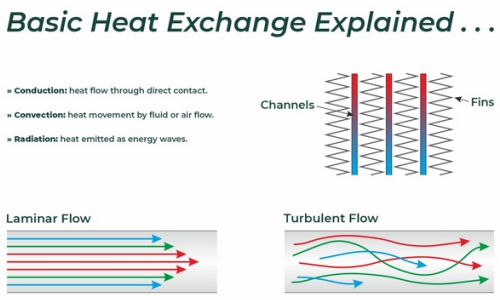
Image from
'basic heat exchange explained' Link to:
full article
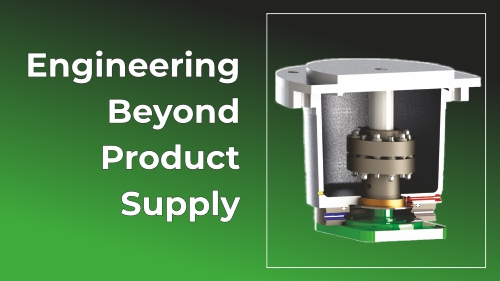
Engineering Beyond Product Supply: Basic hydraulic problems can quickly become major reliability and safety risks.
Not all engineering problems are immediately visible.
In hazardous-area hydraulic applications, something as seemingly minor as shaft seal temperature can become a critical reliability and safety issue.
Under fluctuating flow and pressure conditions, hydraulic pump shaft seals can experience pulsation and frictional heating. In extreme cases, seal surface temperatures may rise sufficiently to create a potential ignition risk within ATEX-regulated environments.
A recent project led jbj Techniques to develop a bespoke wet mount bellhousing arrangement specifically designed to control hydraulic pump shaft seal temperatures in demanding hazardous-area applications.
The solution integrated:
» a cooled oil reservoir surrounding the seal area.
» controlled oil flow for temperature management.
» compatibility with horizontal or vertical installations.
» ATEX-compliant bellhousing and coupling arrangements.
The objective was not simply to mount a pump to a motor.
It was to understand how the complete hydraulic and mechanical system behaved under real operating conditions and engineer a practical solution that improved both safety and reliability.
Projects such as this demonstrate how effective engineering often goes far beyond component supply alone.
At jbj Techniques, we regularly support customers with applications involving:
» hazardous areas,
» drivetrain integration,
» hydraulic system reliability,
» torsional behaviour,
» bespoke machining,
» and complex mechanical interfaces.
Because sometimes the real engineering challenge is not the component itself but understanding the operating environment around it.
At jbj Techniques, projects often begin with a component requirement but develop into a broader engineering solution involving mechanical integration, bespoke manufacturing and system-level problem solving.
In hazardous-area applications, understanding how the complete hydraulic system behaves under real operating conditions is critical to both safety and reliability.
Engineering challenges in these environments rarely begin and end with a single component.
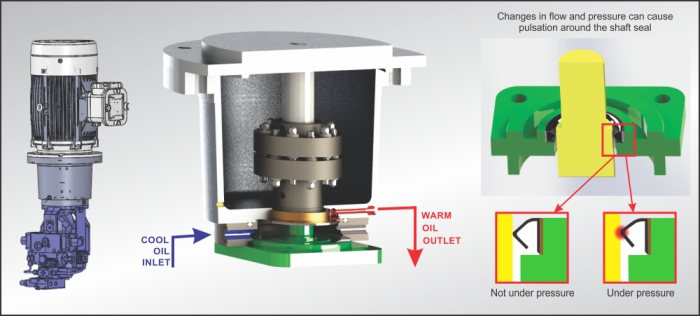
Image from
'wet-mount-bellhousing-arrangement' Link to:
full article
Speak with the engineers at jbj Techniques about your project be it small or large, simple or complex. High quality mechanical and fluid power products are always available straight from our comprehensively stocked warehouse, but, we are more than that! If you need more, be it the smallest drive component through to complex drive line or fluid power component packages, then speak to our experienced sales team who will provide a solution based upon your application requirements
We:
» assess the application,
» discuss our recommendations with you,
» design and specify the required component packages,
» machine and build the required components and . . .
» deliver to you.
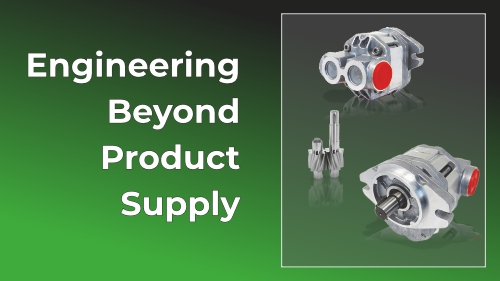
Engineering Beyond Product Supply: Many hydraulic performance problems are caused by the system, not just the component.
If your fluid power system is experiencing:
» overheating,
» pressure instability,
» cavitation,
» excessive noise,
» reduced efficiency,
» or shortened component life.
the root cause may involve far more than simply replacing a pump or valve.
In many applications, long-term performance is heavily influenced by:
» pump selection,
» cooling performance,
» flow characteristics,
» filtration» installation layout,
» duty cycle,
» and overall system integration.
Small engineering improvements in these areas can often deliver major gains in:
» reliability,
» efficiency,
» operating temperature,
» controllability,
» energy consumption,
» and component lifespan.
At jbj Techniques, many customer enquiries begin with a component requirement but develop into a broader discussion about improving overall system performance and reducing operational problems long term.
Because the most effective fluid power solutions rarely come from focusing on a single component in isolation.
From couplings, bellhousings and hydraulic systems through to complete drivetrain integration challenges, our focus remains the same: understanding the application, understanding the system, and engineering practical solutions that work reliably in the real world.
Speak with the engineers at jbj Techniques about your project be it small or large, simple or complex. High quality mechanical and fluid power products are always available straight from our comprehensively stocked warehouse, but, we are more than that! If you need more, be it the smallest drive component through to complex drive line or fluid power component packages, then speak to our experienced sales team who will provide a solution based upon your application requirements
We:
» assess the application,
» discuss our recommendations with you,
» design and specify the required component packages,
» machine and build the required components and . . .
» deliver to you.
Engineering Beyond Product Supply: How do you power multiple hydraulic functions from a single hydraulic source without adding complexity?
Low Noise, High Efficiency Hydraulic Motor / Triple Pump Assembly
How do you power multiple hydraulic functions from a single hydraulic source without adding complexity?
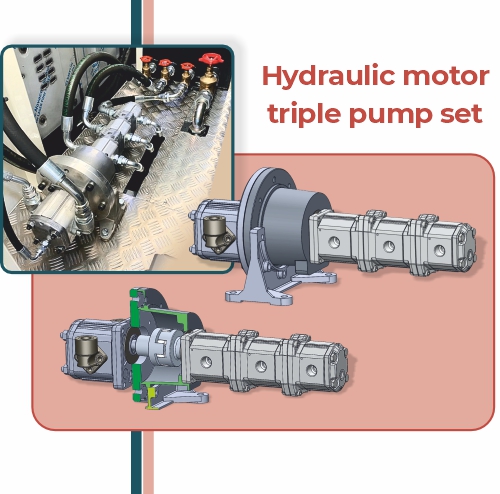
ELIKA® hydraulic gear pumps, hydraulic gear motors, and FTP fluid transfer gear pumps are ideal for applications where low noise operation and high efficiency are critical, such as this bespoke hydraulic motor / triple pump assembly engineered by jbj Techniques.
In this application, a Marzocchi hydraulic gear motor drives a triple Marzocchi hydraulic gear pump arrangement comprising three pumps of differing capacities. Each pump provides hydraulic power to an individual function on a road marking vehicle, all from a single hydraulic source.
By optimising pump capacities to suit the demands of each circuit, the assembly generates independent flow for three separate machine functions without the need for a flow divider. This reduces energy losses, improves overall system efficiency, and provides a simpler, more effective hydraulic solution.
For complex hydraulic applications, assemblies can be configured with a single hydraulic motor driving multiple gear pumps of differing displacements, enabling independent flow generation whilst maintaining efficient and reliable system operation.
This complete assembly was designed and built in-house by jbj Techniques to meet a specific customer requirement, demonstrating our ability to develop practical, application-focused hydraulic solutions. Custom adaptors and mounting components were manufactured using our in-house machining facilities, allowing the assembly to be configured precisely to suit the installation requirements.
A motor-pump set consists of a prime mover, such as a petrol engine, diesel engine, electric motor, hydraulic motor, or air motor, connected to a fluid or gas pump via either a coupling alone or a bellhousing and coupling combination. The key advantage of using a bellhousing is that it maintains full concentricity between the prime mover and the connected pump, helping to prevent premature coupling failure caused by shaft-to-shaft misalignment.
The assembly incorporates precision bellhousing and coupling integration to maintain accurate shaft alignment, reducing coupling loads and promoting long-term drivetrain reliability. This approach also enables compact, space-efficient package configurations that simplify installation and ongoing maintenance.
High-quality mechanical and fluid power products are always available directly from our comprehensively stocked warehouse, but we offer far more than component supply alone. Whether you require a single drive component or a complete, complex driveline package, our experienced team works closely with hydraulic engineers and OEM designers to develop reliable, high-performance solutions tailored to the operational demands of the application.
Key Design Benefits:
» Independent flow generation without the need for flow dividers.
» Reduced energy losses and improved circuit efficiency.
» Optimised pump capacities for individual circuit requirements.
» Precision bellhousing and coupling alignment.
» Reduced coupling loads and improved drivetrain longevity.
» Compact, space-efficient assembly design.
» Simplified installation and maintenance.
» Full approval drawings provided prior to manufacture.
Providing a solution based upon your application requirements: jbj Techniques can design and build motor-pump assemblies from the extensive stock of hydraulic gear motors and hydraulic gear pumps, creating custom adaptors to mount the gear pumps to the motor using extensive stocks of bellhousings and couplings, supported by our excellent machine shop facilities. Full design drawings are provided for reference and approval before manufacture.
Could a custom motor-pump assembly reduce complexity, improve efficiency, and simplify installation on your next hydraulic project?
Engineering Beyond Product Supply: WHEN THE COMPONENT ISN'T THE PROBLEM
A component fails. It is replaced. Some time later, it fails again.
At that point, replacing the component for a second time may get the machine running again. But it may not answer the more important engineering question: Why did it fail?
In mechanical power transmission and fluid power systems, the component showing the damage is not necessarily the component responsible for creating it. That distinction can turn what appears to be a straightforward replacement enquiry into a much wider engineering investigation.
THE FAILED COMPONENT IS EVIDENCE.
Consider a flexible coupling with a damaged elastomer element.
The obvious response might be to identify the coupling, obtain a replacement element and return the machine to service.
And sometimes that is exactly the correct course of action to take. But repeated damage can indicate something else is wrong within the overall drivetrain.
Misalignment can impose additional loads and movement on a coupling. Torsional vibration can repeatedly stress an elastomer and, undersufficiently severe conditions, damage the coupling or another vulnerable part of the drivetrain. Shock loads, operating speed, temperature and the actual duty of the machine may also need consideration.
Replacing the damaged element deals with the immediate failure.
It doesn't necessarily deal with its cause.
THE SAME PRINCIPLE APPLIES TO FLUID POWER.
A hydraulic pump suffering premature failure can similarly become the focus of attention simply because it is the component showing the symptoms.
But before concluding that the answer is another pump, it can be necessary to look further into the application.
What are the actual operating conditions?
Is the pump correctly selected for the required duty?
What temperatures are being reached?
Arethe installation and fluid conditions compatible with the pump?
Has something changed elsewhere in the system?
The eventual answer may indeed be to replace the pump withan equivalent unit.
Alternatively, investigation may show that changing the component without addressing the conditions in which it operates is likely to reproduce the same problem.
If a faulty appliance repeatedly blows a fuse, continually replacing the fuse doesn't solve the fault in the appliance.
The same principle can apply to machinery. Replacing the component showing the damage may restore operation, but if the underlying cause remains, the failure may simply happen again.
ASK A DIFFERENT QUESTION
This is where a replacement enquiry can change direction.
Instead of asking: “What component will replace this one?”
it may be more useful to ask: “What caused this component to fail?”
Those are very different questions.
The first can often be answered from dimensions, specifications and manufacturers' data.
The second requires an understanding of the application.
That can mean considering the complete drive or hydraulic system: the prime mover, driven equipment, speeds, loads, alignment, dutycycle, temperatures, installation and operating environment.
The failed component becomes one piece of evidence rather than the whole investigation.
SOMETIMES A REPLACEMENT IS JUST A REPLACEMENT
None of this means that every failed component requires an elaborate investigation.
Components wear out. Elastomers age. Bearings reach the end of their service life. Machines occasionally need nothing more complicated than the correct replacement part.
Engineering judgement includes recognising those situations too.
The important distinction is knowing when a failure appears consistent with normal service and when the evidence suggests that simply replacing the damaged component may leave the underlying problem untouched.
At jbj Techniques, that distinction is part of looking beyond individual products and considering how components behave as part of the complete mechanical or fluid power system.
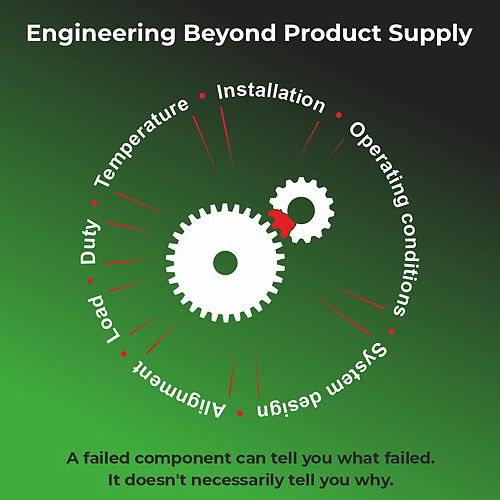
Because a failed component can tell you what failed.
It doesn't necessarily tell you why.
Finding the why is where the engineering begins.
That too is Engineering Beyond Product Supply.
Engineering Beyond Product Supply: KNOWING WHEN TO SAY NO.
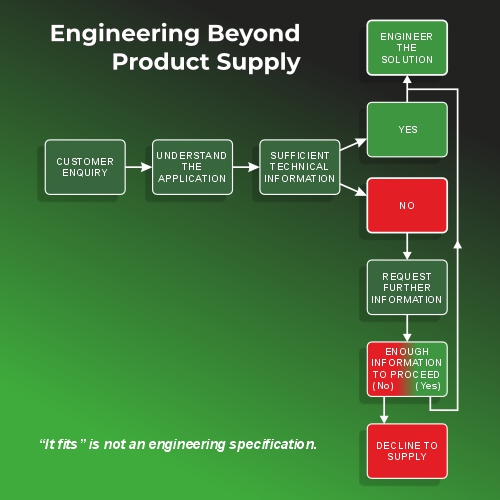
Not every engineering enquiry should result in a sale.
A recent enquiry to jbj Techniques concerned an obsolete brake that was regularly giving problems within a safety-critical machinery application.
It appeared to be a relatively straight forward component replacement. However, the proposed brake would not be a like-for-like replacement, so any alternative needed to be validated against the original design intent.
Before recommending an alternative, we needed to know:
» What was the shaft speed?
» What were the power and speed characteristics of the drive motor?
» What was the gearbox ratio?
» How was the motor controlled?
» What braking torque was required?
» Could the existing framework be modified for an alternative component?
» Importantly, why was the existing braking arrangement causing problems?
If an existing component is repeatedly causing problems, replacing it with something similar may simply reproduce the problem.
Looking Beyond the Brake
An alternative to simply replacing the mechanical brake was considered.
Experience from another application suggested that control led electrical braking could potentially bring the machinery to rest, with a mechanical brake used primarily for holding once stationary.
Its suitability depended on the machine, control system, operating conditions and safety requirements.
The necessary technical information was not available.
Without it, jbj Techniques could not be confident that any proposed alternative was appropriate.
So we declined to proceed.
When 'It Fits' isn't Enough
When replacing machinery components, it can be tempting to begin with physical dimensions and headline performance figures.
Will it fit?
Does the torque rating look sufficient?
Can it be mounted to the existing equipment?
Necessary questions, but not always sufficient.
A component may physically fit. Its headline specification may appear suitable. Something similar may even have worked elsewhere. But "it fits" is not an engineering specification.
The complete application still matters.
That principle extends beyond braking systems to couplings, gearboxes, clutches, hydraulic pumps and motors, drive systems and other mechanical and fluid power components.
Sometimes further questions confirm a similarly rated component issuitable.
Sometimes they lead to a different solution.
And occasionally they reveal that there isn't enough information to recommend anything responsibly.
Engineering Judgement Matters
Engineering Beyond Product Supply isn't always about developing a more sophisticated solution.
Sometimes it means recognising the limitations of the information available.
When an application is safety-critical, making assumptions simply to secure an order is not an acceptable option.
Occasionally, the correct engineering decision is not to supply anything at all.
That too is Engineering Beyond Product Supply.
Engineering Beyond Product Supply: THE ENGINEERING BEHIND A SIMPLE ANSWER
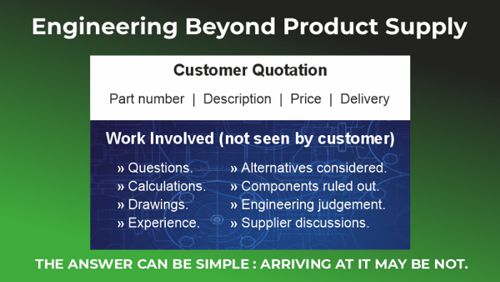
A straightforward product recommendation may require more engineering work than the final answer suggests.
An enquiry arrives at jbj Techniques with what appears to be a straightforward question: “Can you supply something suitable for this application?”
Eventually, the answer may be equally straightforward: “Yes.”
Between the enquiry and the answer, the application may have been examined in considerable detail.
Before The Product Comes The Application
Selecting an engineering component isn't always a matter of finding something with the correct dimensions and the associated required performance figure in the catalogue.
Depending upon the application, questions might include:
» What power needs to be transmitted?
» At what speed?
» What loads will the component experience?
» What is driving it and what is being driven?
» What is the actual operating duty?
» Are there shock loads, frequent starts or reversals?
» What are the environmental conditions?
» What physical space is available?
» How will the component interface with the surrounding machinery?
For a hydraulic application, the questions may instead concern flow, pressure, fluid, temperature, speed, duty cycle and the wider hydraulic circuit. Not every enquiry requires every question. Knowing which questions matter is itself part of the engineering process.
What Happens Before A Recommendation Is Made
Once the application is understood, the work behind a recommendation can take several forms.
It might mean checking manufacturers' technical data or drawings.
It might require a calculation.
It might involve comparing several possible components and ruling some of them out.
A supplier's technical department may need to be consulted.
A standard component might require modification.
An adaptor, coupling or mounting arrangement may need to be designed so that several components can work together.
Technical data and calculations are important, but previous applications can also provide useful guidance.
An engineer may recognise a similar arrangement, operating condition or problem encountered elsewhere.
That is where accumulated engineering experience becomes particularly valuable.
Experience Informs The Questions
Since 1974, jbj Techniques has worked with mechanical power transmission and fluid power applications across a wide range of machinery and industries. This does not mean every new application has been encountered before. It means there is a substantial body of experience available when deciding which questions to ask, which information to check and which possible solutions to investigate.
A pump, coupling or gearbox cannot always be considered in isolation. Its suitability may depend upon the prime mover, driven equipment, operating duty, installation and the behaviour of the surrounding system. Each may form part of a larger machine in which the behaviour of one component affects another.
Sometimes the correct answer is a standard product straight from the shelf.
Sometimes it is a standard product with a modification.
Sometimes several components need to be selected and engineered together.
And occasionally the investigation establishes that the product initially requested isn't what the application needs at all.
The Simple Answer
After all that, the customer may receive an email containing a part number, price, drawing and a few lines explaining the recommendation. The answer looks simple. That doesn’t necessarily mean arriving at it was. Engineering Beyond Product Supply isn’t about making straightforward enquiries unnecessarily complicated. It is about doing as much engineering as the application requires, and no more, before confidently saying: “Yes. This will work.”
Engineering Beyond Product Supply: MAKING IT FIT IS AN ENGINEERING DECISION
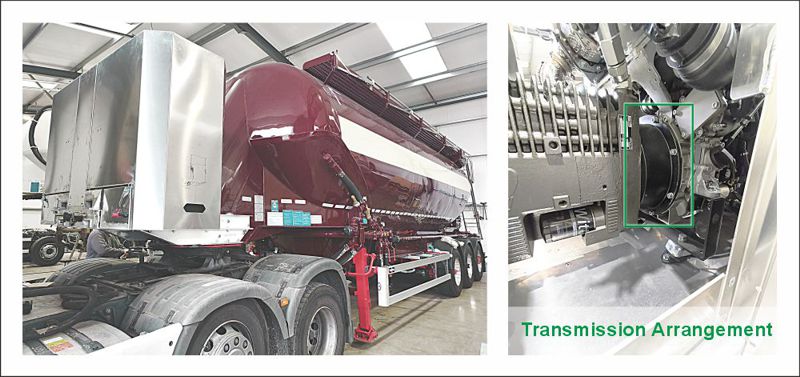
Consider the behaviour before changing the component
Before deciding how to adapt a component, it is important to establish why it was selected. Which characteristics does the application require, and what must the modification preserve?
A recent diesel engine-to-compressor connection for a large articulated tanker vehicle illustrates this approach.
Alongside the requirements of normal operation, jbj considered the potential consequences of compressor seizure. An N-EUPEX DS coupling was selected for its overload-shedding characteristics, with theintention of limiting consequential damage.
The N-EUPEX DS coupling interrupts power transmission following failure of its flexible elements. Its behaviour differs from an overload-holding coupling, which maintains a mechanical drive connection after element failure.
No specific overload release torque was stipulated for this project. The selection concerned the coupling’s failure behaviour, rather than a requirement to disengage at a defined torque.
That distinction matters. How a component behaves when something goes wrong can be an important part of its suitability for an application.
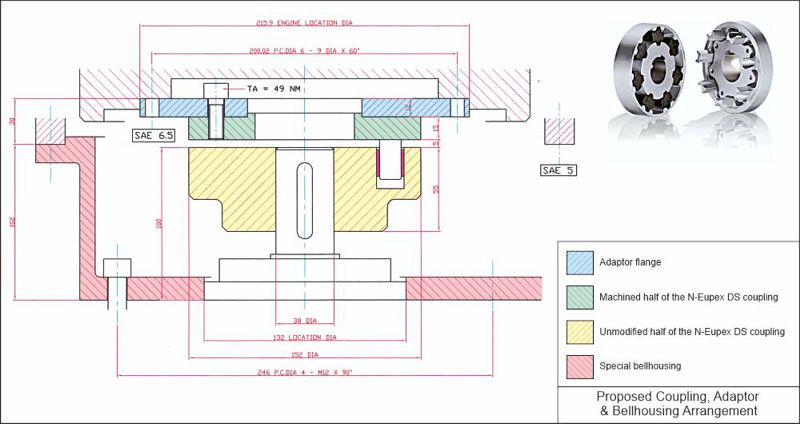
Removing material requires judgement
The available installation space meant that the selected coupling could not be accommodated in its standard form. jbj therefore developed an arrangement incorporating a bespoke adaptor flange, a bespoke bellhousing designed in-house and substantial machining of one coupling half.
Both coupling halves remained in use. The machining allowed one half to connect through the adaptor flange within the available space.
The question was how to achieve that connection while retaining sufficient integrity in the modified component for its intended duty.
A drawing can define the material to be removed. Deciding whether that removal is appropriate requires an understanding of the componentand the application. The coupling modification, flange and bellhousing must also work together as an assembly.
This is where application engineering and machining capability need to inform one another. The required dimensions guide the machining, while the component’s function and integrity place limits on thedesign.
Look beyond the finished assembly
For anyone considering a similar adaptation, three questions deserve attention:
» Which operating characteristics must the component retain?
» What effect will the modification have on its suitability for the duty?
» How will it connect to and interact with the rest of the assembly?
The compressor drive is currently undergoing testing, with design acceptance pending. Its performance in service has yet to be established.
The wider engineering principle is clear: modifying a standard component requires consideration of whether the finished part remains fit for purpose in its application.
Once everything is bolted together, the connection may look straightforward. The thought behind the component selection, modification and installation is less visible, but it is an essential part of the work.
That is Engineering Beyond Product Supply.